Quick Answer
To protect your AC during hurricane season, clear loose items away from the outdoor unit, make sure it is anchored with hurricane straps, pre-cool your home and switch the AC off at the breaker before the storm arrives. Afterward, inspect the unit before turning it on, never run a system that was flooded, and wait for power to stabilize.
Atlantic hurricane season runs from June 1 through November 30, and for Central Florida homeowners that means months of watching the forecast. When a storm is on the way, most people think about windows, water and supplies. Your air conditioner is easy to overlook, but it’s one of the most expensive pieces of equipment in your home, and it sits outside exposed to wind, flying debris and flooding.
A little preparation before a storm, and a few smart steps afterward, can help protect your AC system and get your home comfortable again faster once the power comes back.
Before the Storm: How to Prepare Your AC
1. Clear the Area Around Your Outdoor Unit
High winds can turn loose items into projectiles. Patio furniture, potted plants, grills, toys and yard decorations near your condenser can slam into the unit and damage the coil fins, fan or electrical components.
Bring loose items inside or secure them, and trim any dead or overhanging branches near the unit well before a storm is in the forecast.
2. Check That Your Condenser Is Secured
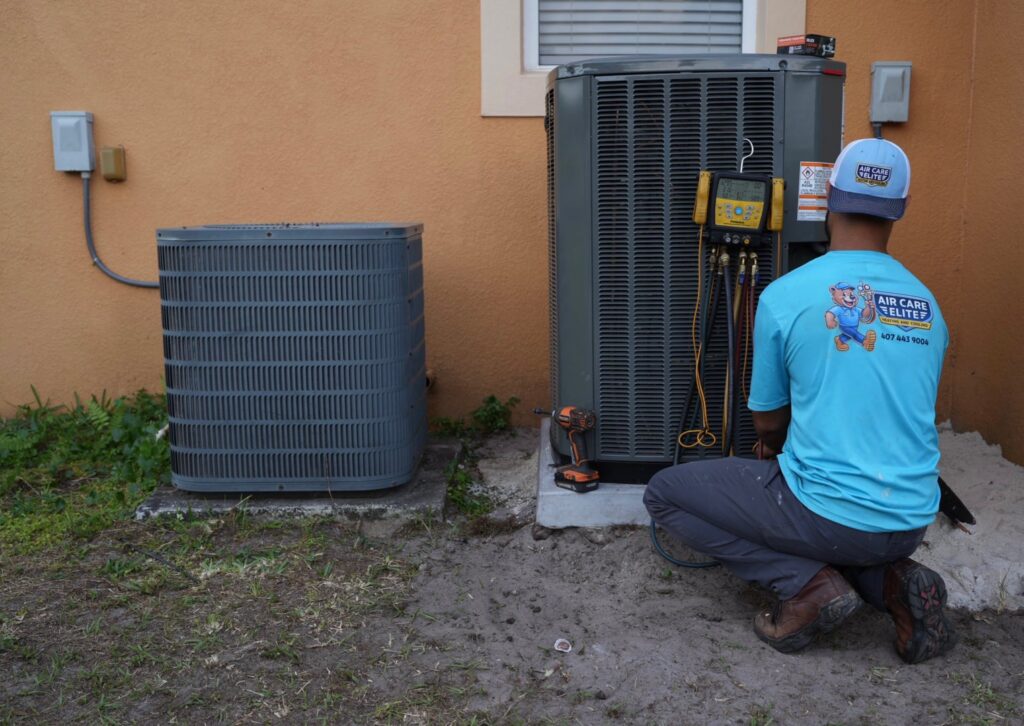
In Florida, outdoor AC units are typically anchored to their pad with hurricane straps or tie-downs. Take a quick look to make sure yours are in place and not rusted, loose or missing. If your unit doesn’t appear to be anchored, have an HVAC professional take a look. This is something we can check during a routine AC maintenance visit.
3. Pre-Cool Your Home
If a storm is expected to knock out power, lower your thermostat a few degrees in the hours before it arrives. A cooler house with closed blinds and doors will stay comfortable longer during an outage.
4. Turn Off Your AC at the Breaker During the Storm
Power flickers, brownouts and surges are common during severe weather, and they can damage your system’s compressor, capacitor and control board. Once the storm is close, turn your system off at the thermostat and switch off the breaker for the air conditioner and air handler.
It’s also worth asking about a surge protector for your HVAC system. It’s a small investment compared to the cost of replacing electrical components.
5. Should You Cover Your Outdoor Unit?
A breathable cover or a piece of plywood over the top can help keep debris out while the system is turned off, but never wrap the unit tightly in plastic. Trapped moisture can lead to corrosion and mold. Most importantly, remove any cover before turning the system back on. Running your AC with a cover in place blocks airflow and can quickly damage the equipment.
After the Storm: Getting Your AC Running Safely
1. Inspect the Outdoor Unit Before Turning It On
Walk outside and look at your condenser before you restore power. Watch for:
- Branches, leaves or debris on top of or inside the unit
- Bent or crushed coil fins
- A unit that has shifted or tipped off its pad
- Damaged refrigerant lines or electrical wiring
- Signs of standing water or flooding
Clear light debris by hand with the power off. If you see any damage beyond that, leave the system off and call a professional.
2. Never Run an AC That Has Been Flooded
If floodwater reached your outdoor unit or indoor air handler, do not turn it on. Water can damage the electrical components and controls, and running a flooded system can be a safety hazard. Have a licensed HVAC technician inspect the equipment first. In some cases components can be repaired, and in others the system may need to be replaced.
3. Wait for Stable Power
When power is restored, it may flicker on and off for a while. Give it some time to stabilize before switching your breaker back on, then turn the system on at the thermostat.
4. Don’t Run Central AC on a Small Portable Generator
Most portable generators aren’t built to handle the startup load of a central air conditioner, and trying to run one can damage both the generator and your HVAC system. If you want backup cooling during outages, talk to a professional about a properly sized standby generator or a ductless mini split for a key room.
5. Change Your Air Filter and Check the Drain Line
Storms stir up dust, debris and moisture. Replacing your air filter after a storm helps your system breathe easier. It’s also a good time to make sure your condensate drain line is flowing. A clog can lead to water leaking inside your home.
6. Watch for Warning Signs
Even if your system turns on, storm-related damage may not be obvious right away. Call for service if you notice:
- Warm air coming from the vents
- Buzzing, grinding or rattling noises
- The system turning on and off repeatedly
- A burning or electrical smell
- Water leaking around the indoor unit
- The breaker tripping when the AC starts
Why Getting Your AC Back Quickly Matters in Florida
After a storm, homes in Central Florida can heat up and get humid quickly. Without air conditioning, indoor humidity rises, which can lead to musty odors and mold growth, especially if any water got inside. Getting your system running safely helps bring humidity back down and protects your home as well as your comfort.
Storm Damage? We Can Help
If your air conditioner isn’t working right after a storm, Air Care Elite Heating and Cooling can inspect your system, make safe repairs and let you know honestly whether a repair or replacement makes more sense. We offer AC repair and emergency AC service throughout Central Florida, including Sanford, Lake Mary, Orlando, Winter Park, Oviedo, Longwood and surrounding communities.
The best time to prepare is before the next storm. A pre-season tune-up lets us check your system’s electrical components, drain line and tie-downs so your AC is ready for whatever the season brings.
As a veteran-owned HVAC company, we’re committed to honest recommendations, quality workmanship and personal service where you’re never treated like just another number.
Call Air Care Elite Heating and Cooling at (407) 443-9004 or contact us today to schedule service.
Veteran-Owned • 5-Star Rated
Need Help With Your AC?
Our team serves homes and businesses throughout Central Florida with honest recommendations and quality workmanship.